There's Liquid Gold in Those Leftover Turkey Bones!
Lower in fat and salt, and infinitely more delicious than store-bought broth, this recipe for homemade turkey stock will turn your leftovers into the start of many healthy meals to come.

Lower in fat and salt, and infinitely more delicious than store-bought broth, this recipe for homemade turkey stock will turn your leftovers into the start of many healthy meals to come.
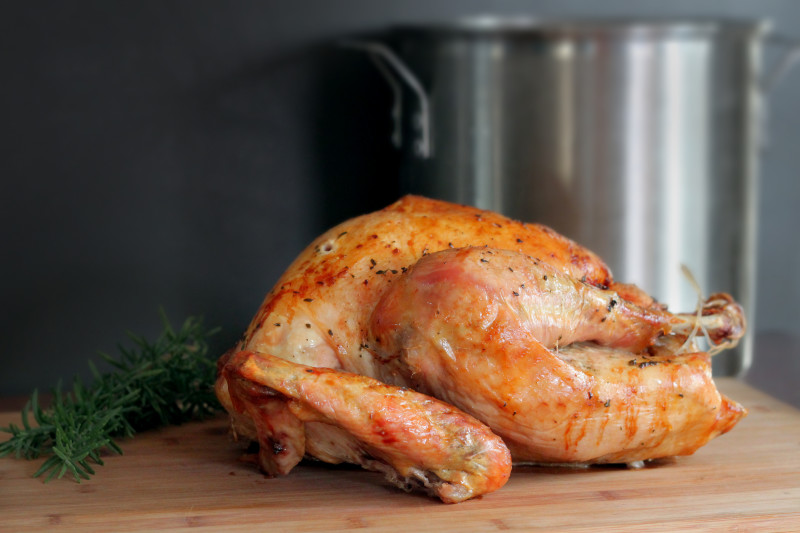
Stock will keep for three days in the refrigerator and for up to six months in the freezer. Consider freezing stock in freezer-safe bags. The bags lay flat and are stackable, saving freezer space. Single-use servings of stock can also be frozen in muffin tins or ice-cube trays. Once frozen, pop them out and store in a freezer-safe bag. If freezing stock in freezer-safe containers, remember to leave extra space at the top. The stock will expand as it freezes.
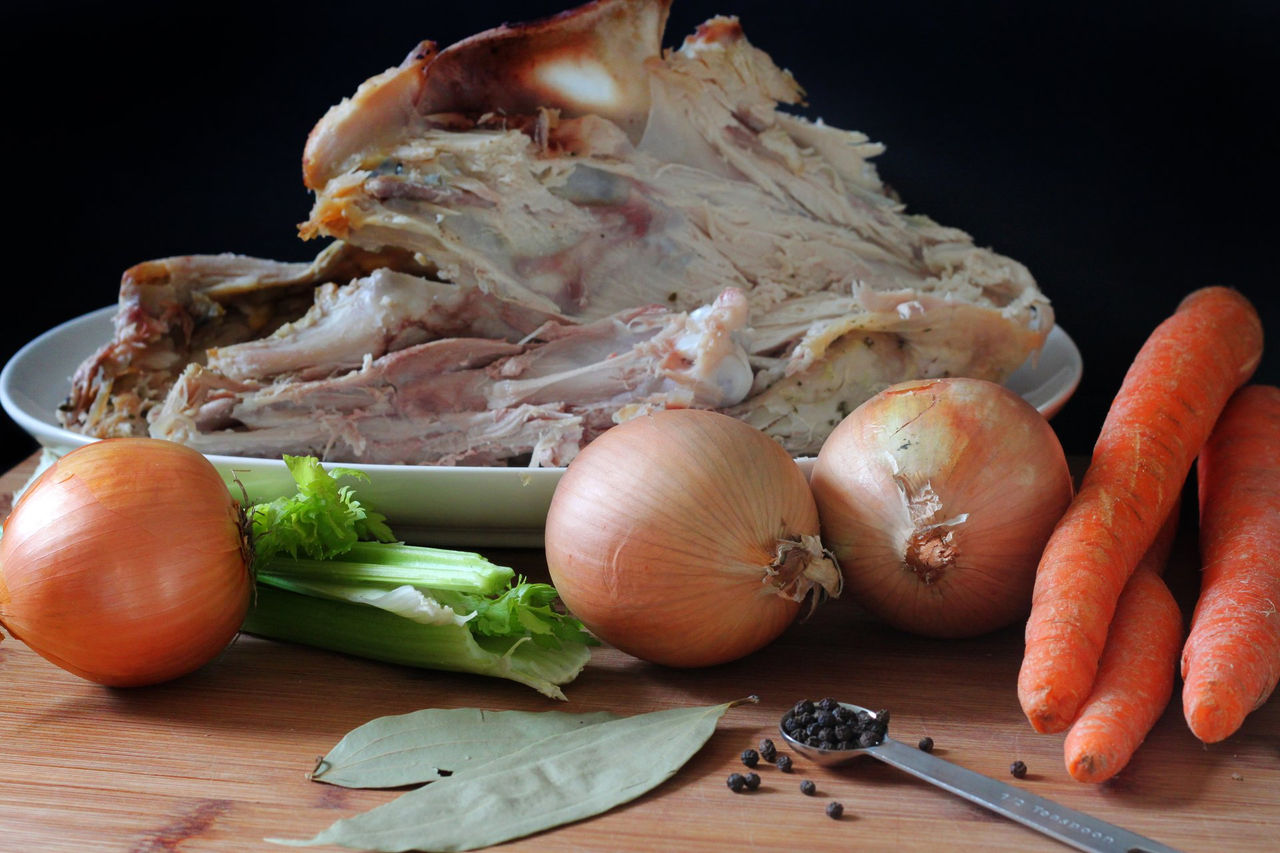
1 turkey carcass and any remaining bones (legs, wings, etc) removed of all fat and skin
Turkey neck, if available
3 onions, unpeeled
3 carrots, unpeeled
3 celery stalks
2 bay leaves
½ teaspoon black peppercorns
Optional:
3-4 garlic cloves
Sprigs of parsley or a few sprigs of fresh thyme
Nutrition information is based on the USDA’s average for 1 cup of home-prepared stock. You are taking control of your own nutrition by removing as much fat as possible and reducing any added sodium to make an above-average stock.
| Calories | 86 | Total Fat | 3 g |
| Saturated Fat | 0.8 g | Monounsaturated Fat | 1.4 g |
| Polyunsaturated Fat | 0.5 g | Trans Fat | 0 g |
| Cholesterol | 7 mg | Sodium | 343 mg |
| Potassium | 252 mg | Total Carbohydrate | 8 g |
| Dietary Fiber | 0 g | Sugars | 4 g |
| Protein | 6 g |

2. Cut onions into quarters; do not remove skins.
3. Chop carrots and celery into four or five large chunks.
4. Add onions, carrots, celery, bay leaves and peppercorns to pot containing the turkey. Add enough cold water to submerge your ingredients, when pressed down, by 2-3 inches. About six quarts (use more or less depending on the size of your turkey). Err on the side of less water. Too much will result in a watery stock.

4. Bring stock to a rapid simmer and then immediately reduce heat so you see a bubble only every so often. Some evaporation is to be expected, but if heat is too high more liquid will be lost than intended.
5. After your stock has reached optimal temperature, skim any foam off the surface that appears in the first half hour. Maintain temperature and cook for three to six hours. The longer the stock cooks, the more flavorful it will be.

8. If using stock right away, skim as much fat as possible off the surface. Otherwise, refrigerate at least eight hours or overnight. Once your stock has set, you will be able to scrape the fat layer off the surface with a spoon. You may be surprised to find the stock is jiggly like jello. This is a good thing! The long simmering time breaks down protein — called collagen — that’s in the connective tissue of the carcass, turns it to gelatin. It will return to liquid once heated and give your stock a rich, silky texture that you can’t get with store-bought stock.


